Temporary Event Terminology Explained
If you have ever sat in a planning meeting wondering what on earth people mean by RAMS, CDM, HIAB or overlay, you are definitely not the only one.
Every industry has its own shorthand, and temporary events are no different. The trouble is, event build language often gets used as if everyone already knows it. If you are an event organiser juggling deadlines, suppliers, budgets and senior stakeholders, that can make it harder to ask the right questions early.
Those questions matter. The UK events industry is now worth an estimated £68.7 billion to the national economy. According to the latest Events Industry Alliance (EIA) Size and Scale Index (SASIE), the UK’s main exhibition venues hosted an estimated 1,154 exhibitions and conferences with an exhibition element in 2025, attracting around 6.8 million visits. When that much activity is moving through venues and event sites, shared language becomes a kind of operational shorthand.
So here is a plain-English and Event Build Glossary and guide to the terms that come up most often on temporary event builds, what they actually mean, and why they matter!
The Safety and Sign-Off Terms
RAMS stands for Risk Assessment and Method Statement
In simple terms, it is the document that explains the risks involved in a job and how the work will be carried out safely. HSE says a method statement brings together the hazards for a task and the controls that will be used, especially on higher-risk, complex or unusual work.
For event organisers, the key point is this: good RAMS should be specific to your site and your build, not copied and pasted from somewhere else.
CDM Means the Construction Design and Management Regulations 2015
That can sound like something for permanent construction sites only, but HSE’s event guidance is clear that if your event includes building temporary structures like stages and marquees, CDM should be considered in your management arrangements. On projects involving more than one contractor, the client may need to appoint a Principal Designer and Principal Contractor.
In plain English, the Principal Designer looks after health and safety coordination in the pre-construction phase. The Principal Contractor takes control of the construction phase and coordinates health and safety during the build and breakdown.
If you only remember one thing, make it this: HSE says there must be clarity over who is in control and who is responsible for safety matters.
Temporary Structures
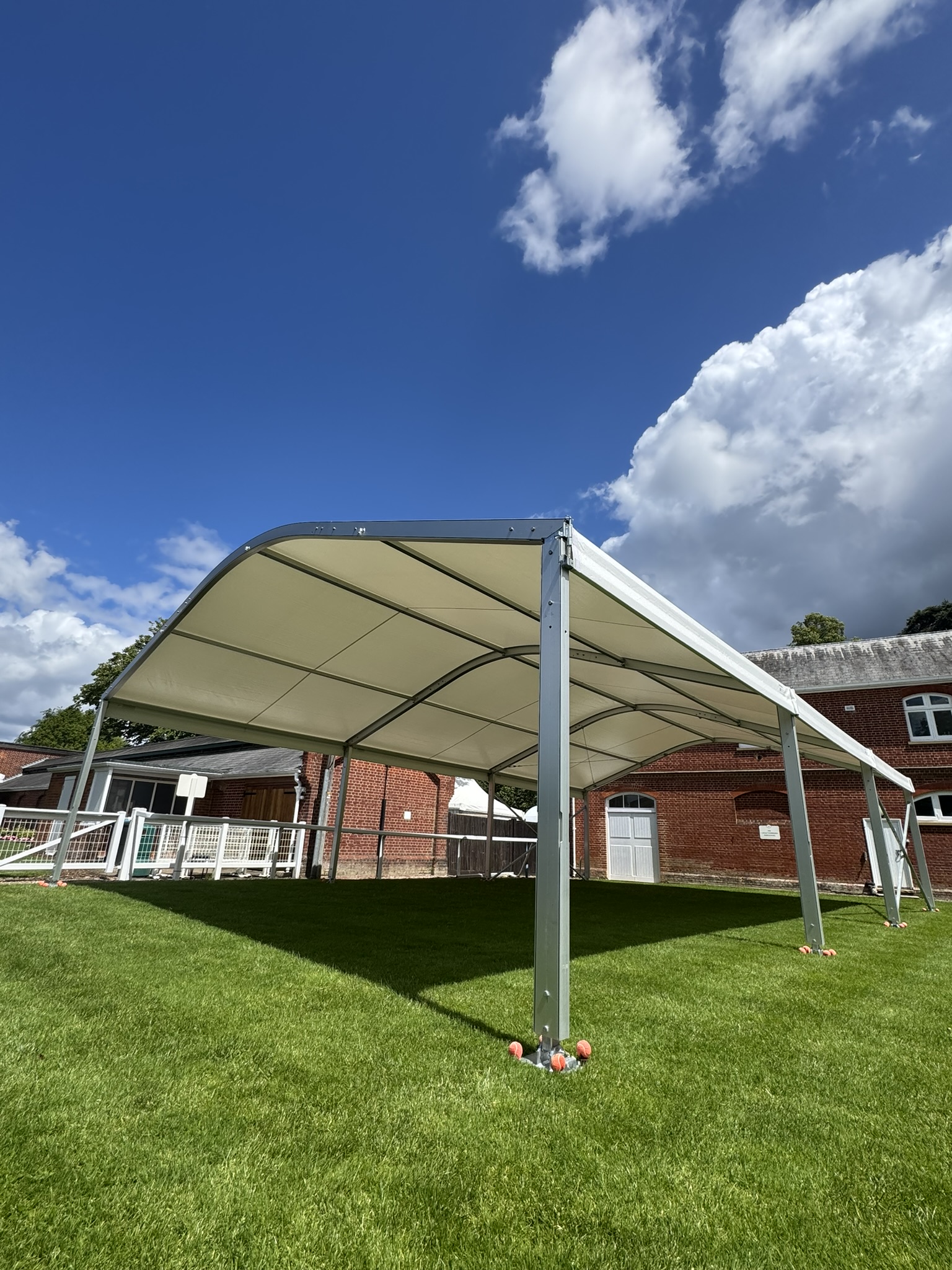
A temporary structure is exactly what it sounds like: a structure installed for the event and removed afterwards. HSE’s event safety guidance lists examples like grandstands, stages and marquees, and notes that their failure “could have devastating effects”, which is why design, siting, planning and inspection matter so much.
Overlay
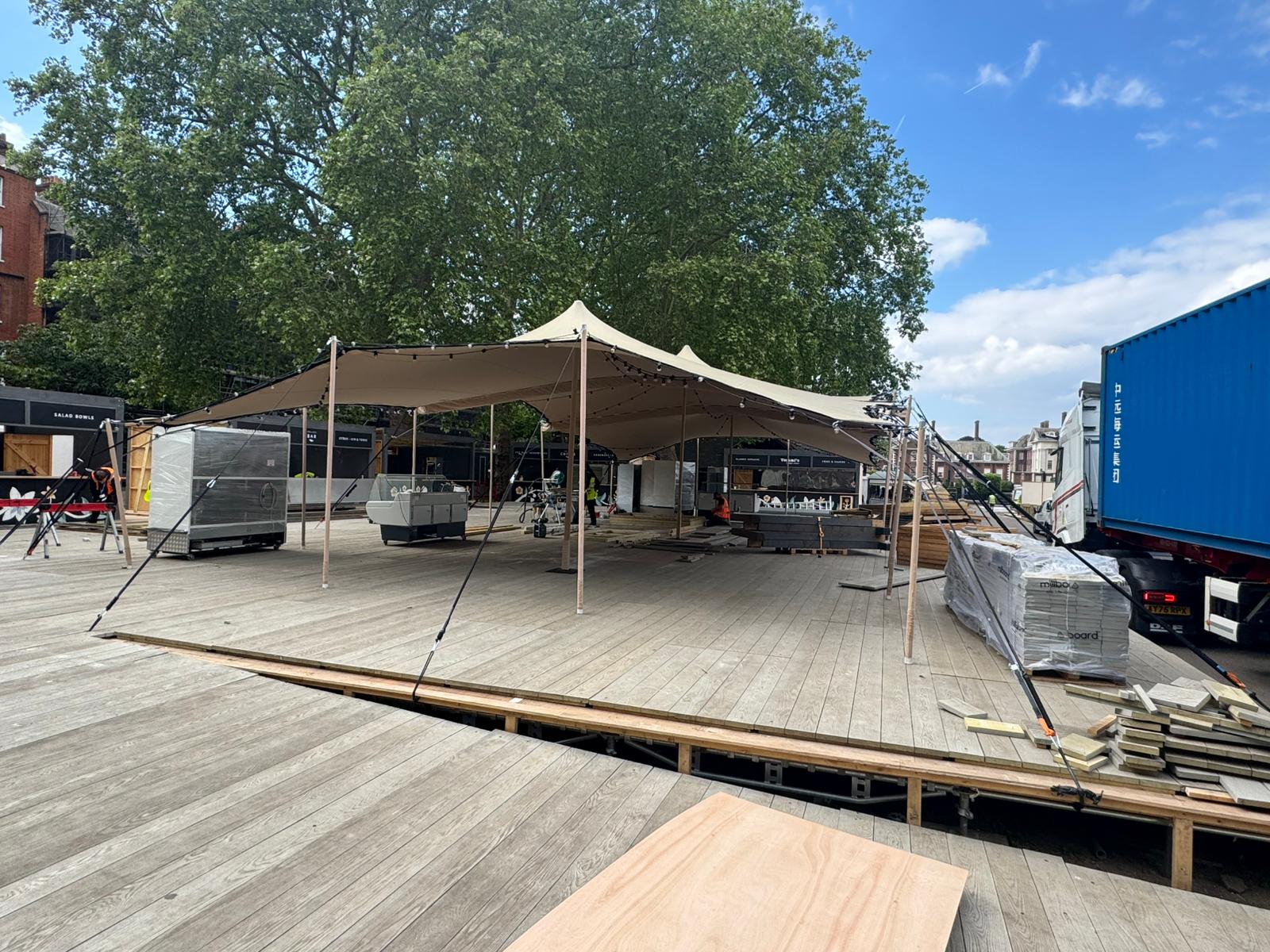
Overlay sits alongside this: it is the broader package of temporary infrastructure that turns a venue into an event-ready space.
Ballast
Ballast is the weight used to hold a structure down when it cannot be pegged or fixed into the ground. Depending on the site, that might be concrete blocks, water ballast or steel weights. It matters because ballast is rarely just a technical detail; it affects transport, lifting, access and cost.
Structural & Wind Calculations
Structural calculations are the engineering calculations that show a structure can safely carry the loads expected of it. These calculations also determine amount off ballast needed or the reading needing for a pull test determining if the ground is suitable.
Wind calculations and a wind management plan show how a structure performs in different wind conditions and what action should be taken as conditions change.
The Purple Guide says structures must be secured with their wind ratings in mind, and that wind conditions should be monitored with an anemometer during the event.
Service Plans, CAT Scanning, Pegging and Staking
Then there are service plans, CAT scanning, pegging and staking. These all sit in the same conversation. If a structure needs to be pegged into the ground, you need to know what is already below the surface.
HSE’s buried-services guidance says that plans should show the recorded line and depth of known services, but it also warns that plans alone are not sufficient and should be used as the basis for a proper site survey. Services may have moved, depths may have changed, and some older routes may never have been recorded at all.
Services should be traced across the full work area and positively identified with trial holes where needed.
Site Surveys
A site survey is where these questions start to get answered in the real world. Your supplier visits site, looks at levels, access, overhead obstructions, ground conditions and how the structure will actually sit in the space.
While site surveys might feel a bit boring, they are crucial to making sure an event both looks right and works safely on the day.
Useful question to ask: Do we have up-to-date service plans, and can this structure be pegged or will it need ballast?
The Build Window and Logistics Terms
This event build glossary of build window and logistic terms is the language of making the plan actually happen.
Build Windows
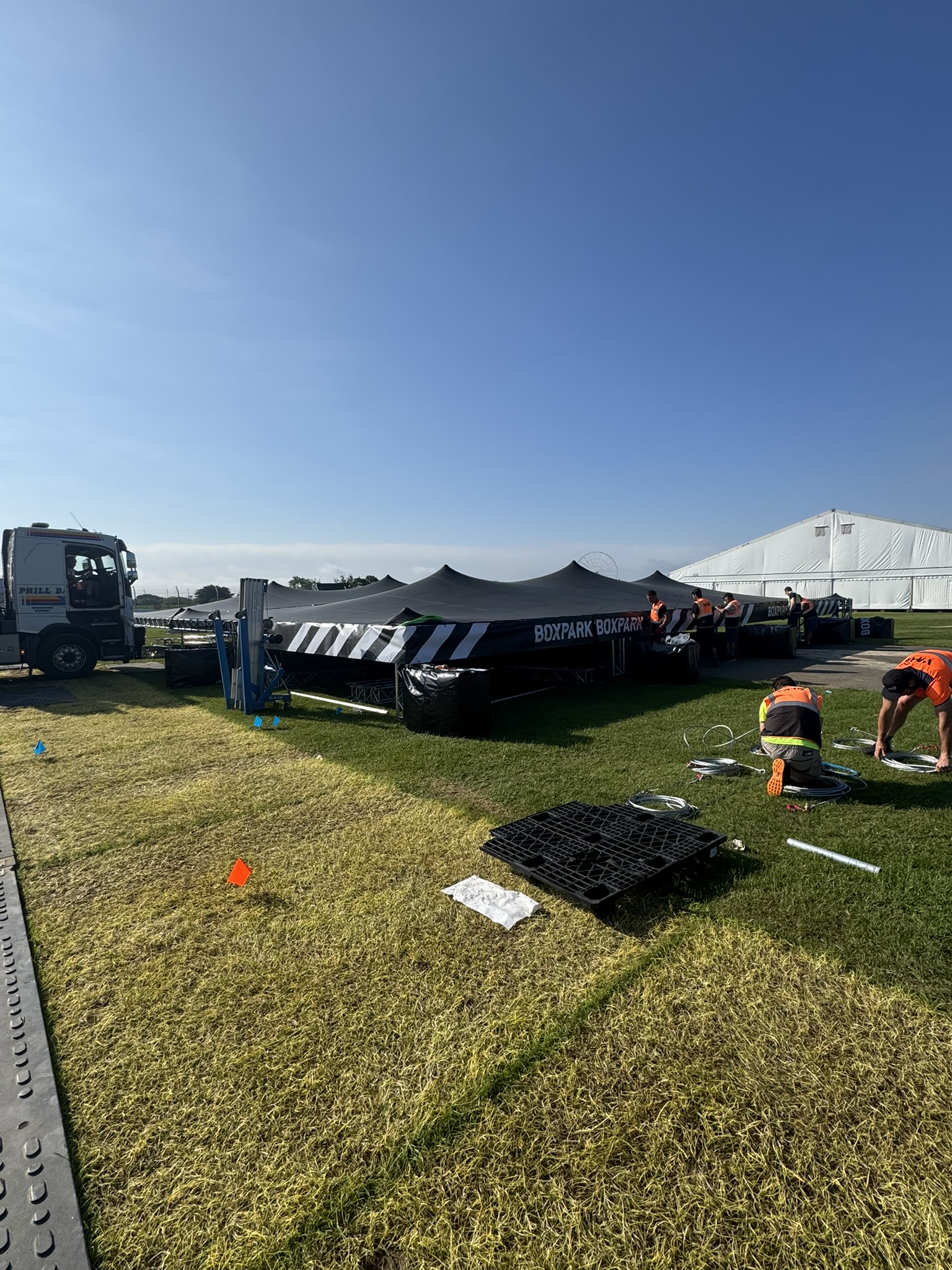
A build window is the amount of time available to get everything installed before the event opens. Smaller window, more pressure. In practice, that can mean bigger crews, tighter sequencing, more plant on site and less room for delay. The same logic applies in reverse to the de-rig, which is simply the breakdown and removal phase after the event.
Marking Out
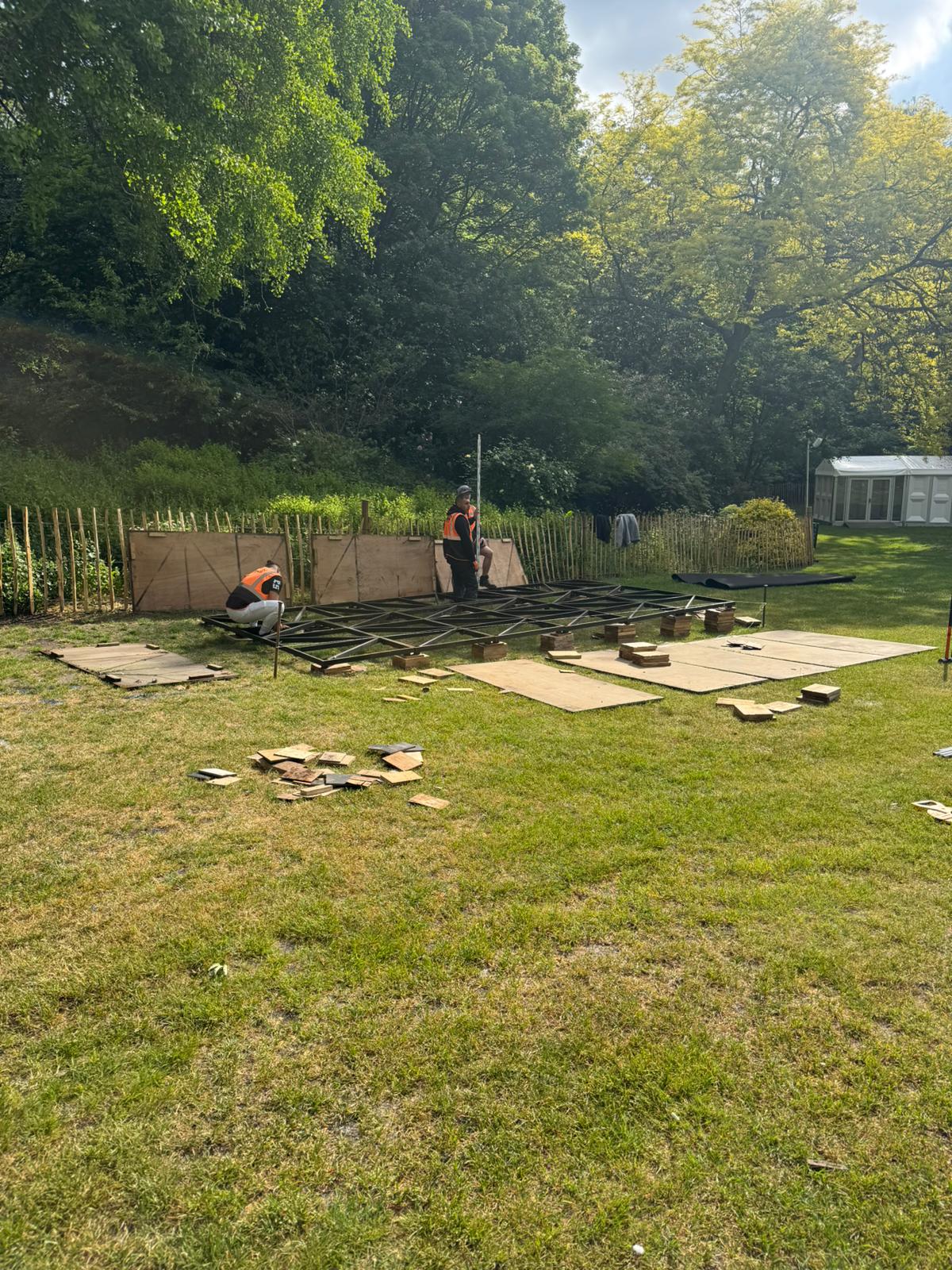
This is the process of setting out the exact footprint of a structure on site. This is often linked to CAD plans, where the event layout, services and other infrastructure can be overlaid before anyone arrives. It is one of those unglamorous steps that saves a lot of pain later.
First and Second Fixes
Another common term on event build sites is first fix and second fix.
- “First fix” usually means the early-stage installation that gives everyone else something to work from, such as the main structure, flooring or initial service runs.
- “Second fix” is the next layer: dressing, lighting, branding, furniture, final connections and testing.
- “Snagging” is the final walk-round to pick up anything that needs adjusting before sign-off.
The most useful takeaway here is that event build language is usually about sequence. If you understand what has to happen first, you will understand where the genuine pressure points are.
A useful question to ask is “What is the actual build window, and what has to be completed before other suppliers can start?”
The plant, access and movement terms. Finally, jargon surrounding kit and movement. Here are a few key ones.
HIAB
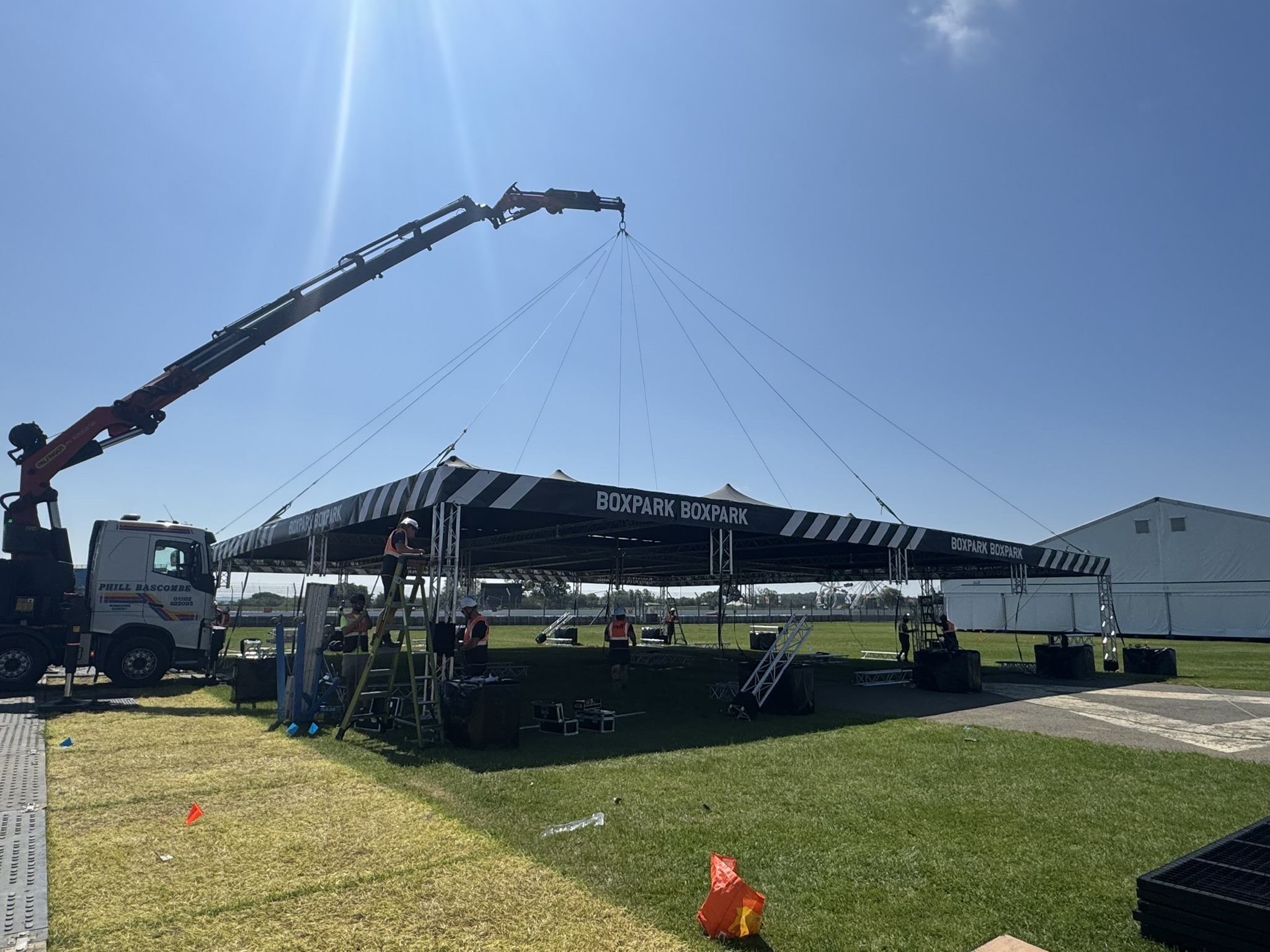
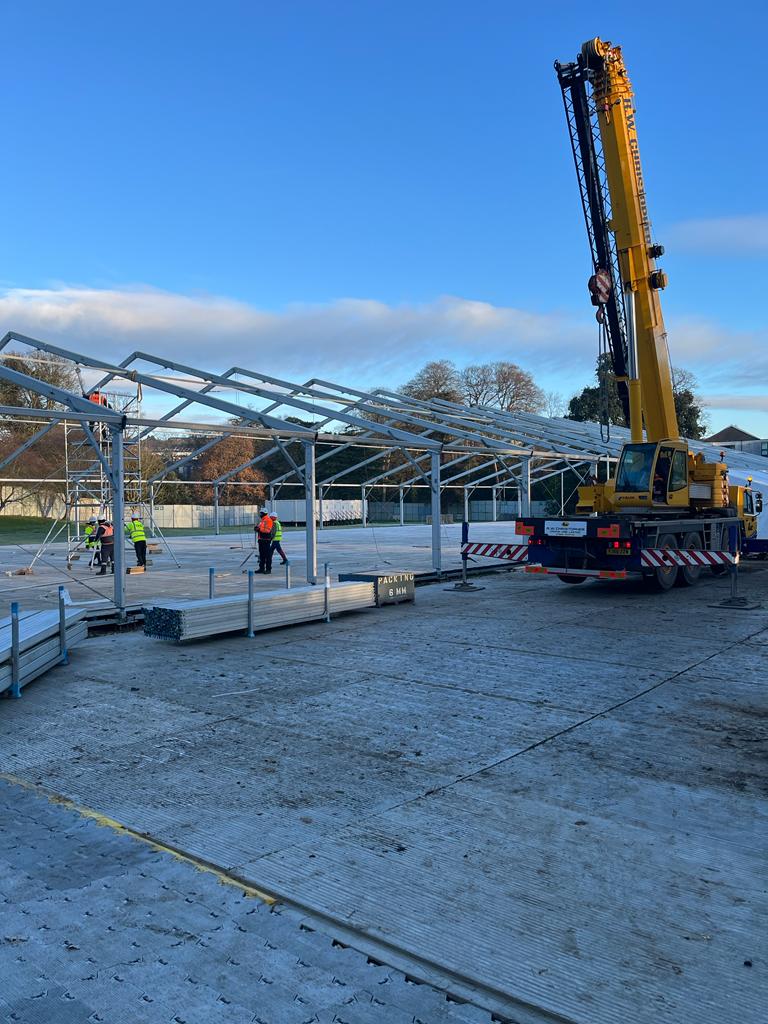
A HIAB is essentially a vehicle mounted loader crane. They can be described as loader cranes and cranes mounted on vehicles that give teams the flexibility to load, unload and place heavy items without bringing in a separate crane for every lift.
On an event build, that often means ballast, truss, containers, generators or decking.
Telehandler
A telehandler is the machine widely used to move heavy items around a site. Telehandler operations need safe traffic routes and proper separation between pedestrians and vehicles.
MEWP
A MEWP is a Mobile Elevating Work Platform used for safe work at height and should always be used on firm, level ground, with the right support and setup.
Banksman
A banksman is the trained signaller who helps guide vehicle movements, especially during reversing. Where reversing needs managing safely, trained signallers are crucial.
Access Routes, Traffic Management, Site Inductions and Welfare Facilities
Most event jargon is not there to sound clever. It exists because temporary events are complex, fast-moving and safety-critical. Once you understand the language, it becomes much easier to spot risk early, ask better questions and make sharper decisions. The good news is that an experienced supplier will be knowledgeable on all of these areas.
If you are shaping a brief for your next event and want a team who can explain the language as clearly as they deliver the structure, get in touch.
We would be happy to sense-check your plans, talk through the site, and quote for the right temporary event solution for your next build. Find out more about our safety and event build certifications, or contact one of our team today.
Work With Us
Most event jargon is not there to sound clever. It exists because temporary events are complex, fast-moving and safety-critical. Once you understand the language, it becomes much easier to spot risk early, ask better questions and make sharper decisions. The good news is that an experienced supplier will be knowledgeable on all of these areas.
If you are shaping a brief for your next event and want a team who can explain the language as clearly as they deliver the structure, get in touch.
We would be happy to sense-check your plans, talk through the site, and quote for the right temporary event solution for your next build. Find out more about our safety and event build certifications, or contact one of our team today.