Outdoor event builds are becoming more complex…
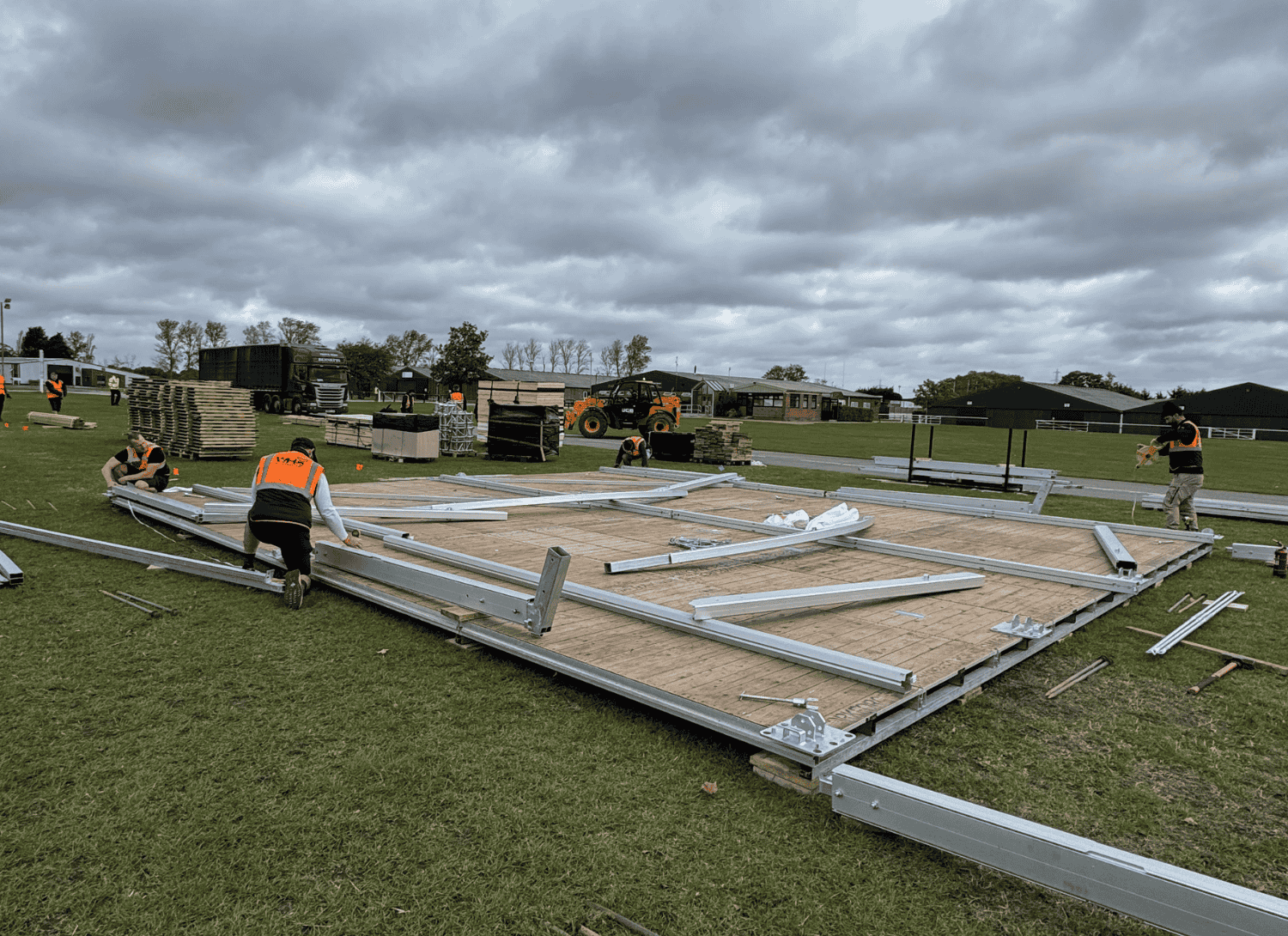
As the events market continues to grow, outdoor event builds are becoming larger and more complex. As events continue to grow in scale and complexity, the need for rigorous, detailed planning has never been greater. Understanding the requirements for your temporary event structures whether stretch tents, marquees, or truss systems is key to getting details right early.
Even seemingly minor issues can easily snowball into major delays onsite if you’ve not planned ahead.
We’re often brought in to resolve issues on site that could have been avoided with earlier planning; something we’re always happy to support our clients with. But when those problems surface during the build, they inevitably add pressure at the very moment clarity is needed most.
Here we’ll walk you through the key logistics and structural considerations to plan well in advance, so your outdoor build runs smoothly, efficiently, and cost-effectively.
Don’t Let Last-Minute Changes Derail Your Event
While sudden inclement weather often takes the blame, most outdoor event build delays are rooted in human factors rather than the weather. Successful delivery depends on early planning, clear communication, and a proactive approach long before anyone steps on site.
If access requirements aren’t fully mapped out, or key details aren’t clarified at an early stage, it can create unnecessary complexity later on and at a time when you often won’t have time. What may appear to be a small adjustment on paper can ripple through logistics if it’s raised on site and not before. This is why early clarity makes such a measurable difference to a smooth event build.
Here are things to look out for…
– Last-minute layout changes: Moving a stage or seating late on can derail an entire plan. Every drawing, delivery, and crew schedule needs careful consideration so changes to this can often add unforeseen and stressful delays to a build.
– Access restrictions: Limited vehicle access or strict delivery windows (common in city streets or park venues) can bring construction to a standstill if trucks or equipment arrive at the wrong time or place.
– Missing site details: Knowing detailed information like underground utilities, nearby structures and movements, or key event timings upfront helps on-site teams plan efficiently and avoid unnecessary last-minute adjustments onsite.
The oversight checklist that helps keep safety, cost and build timelines on track
Even small oversights can hike costs or create safety risks which need to be addressed.
Some common examples to look out for include:
- Power and cable routing: Plan your power feeds carefully. Use cable ramps or overhead routes to prevent trip hazards and electrical risks, keeping both crews and guests safe during the build (and of course the live event.)
- Ground protection: Use matting or temporary flooring to shield lawns and premium surfaces. Planning this early avoids damage fees and keeps the venue happy; an important consideration, always!
- Signage and branding loads: Large banners, screens or flags on marquees add surface area and wind load. Proper engineering must account for these graphics, since temporary structures can destabilize if overloaded by wind. Always include every piece of branding including banners, screening, and flags in your structural plan from the outset.
- Crowd flow vs. aesthetics: Factors like layout and crowd flow are especially important when installing outdoor solutions such as stretch tents. Even a striking VIP tent or stage can create bottlenecks. Plan intuitive paths and clear exits early to balance style with safety and minimize on-site issues during setup.
- Compressed install windows: Cheaper venue rates and staff overtime often tempt planners to shorten build days. However, rushing build days often backfires, causing mistakes and overtime that outweigh any savings. Always schedule extra buffer time or crews to keep costs down.
Even small issues – from misplaced cables to tight build windows – can add up quickly. Prioritising safety and clear logistics from the start keeps event day running smoothly and stress-free. We just love this quote from Engineerica who reminds us to…
…build in buffer time. If the setup requires six hours based on estimates, schedule additional time. The unexpected always emerges, and compressed timelines create stress and errors. (Engineerica, 2026)
The Hidden Cost of Last-Minute Spec Changes
Changing the spec at the eleventh hour might be needed but it comes with a real cost. Tweaks to sizes or layouts on site often trigger a chain of expensive adjustments. Schedules and budgets can be disrupted, and this isn’t what anyone wants. Common consequences include:
- Timeline disruption: Late tweaks can derail schedules, forcing crews extending the build at an additional cost.
- Supplier premiums: Rush orders, emergency shipping, and last-minute supplier changes are all likely to increase costs.
- Quality compromise: Hasty changes risk ill-fitting setups that can damage your reputation.
The bottom line is that every last-minute adjustment ripples through your event build and can not only be costly but can also be stressful. Early, detailed planning keeps costs, time, and stress under control.
Practical Advice for Smoother Builds
Getting details right early makes everything run more smoothly. Finalise layouts, branding, guest numbers, and timelines as soon as possible. The more information you provide your suppliers upfront, the fewer last-minute surprises you’ll face as many issues are preventable with solid planning.
Partnering early with an experienced temporary event structure supplier (like WH Silverbacks) is crucial. A knowledgeable team can identify potential problems on paper before they become costly issues on site. Effective preparation doesn’t happen by accident; it happens by planning ahead and staying ahead of problems during outdoor event builds.
What to do in practice:
- Lock in key decisions early: Confirm shape, size, access, crowd flow, power, and other critical details.
- Share everything upfront: Give your supplier all the information they need so nothing is missed.
- Let your supplier plan the build: Rely on their expertise to schedule tasks efficiently, reduce risk, and prevent costly last-minute changes.
By planning proactively, you’ll be able to transform what could be a stressful scramble into a confident, well-coordinated execution. That’s why we guide our clients through a thorough planning process, ensuring build days are exactly what they should be: exciting, busy, well-organized, and completely stress-free.
Work With Us!
Have a Project You’d Like to Discuss? – Get In Touch
Ready to take the stress out of planning your next outdoor event build?
Contact us to discuss your next outdoor event build or call us for a free quote.
Tel: 01202 096957
Email: info@whsilverbacks.co.uk
We’d love to hear from you.